



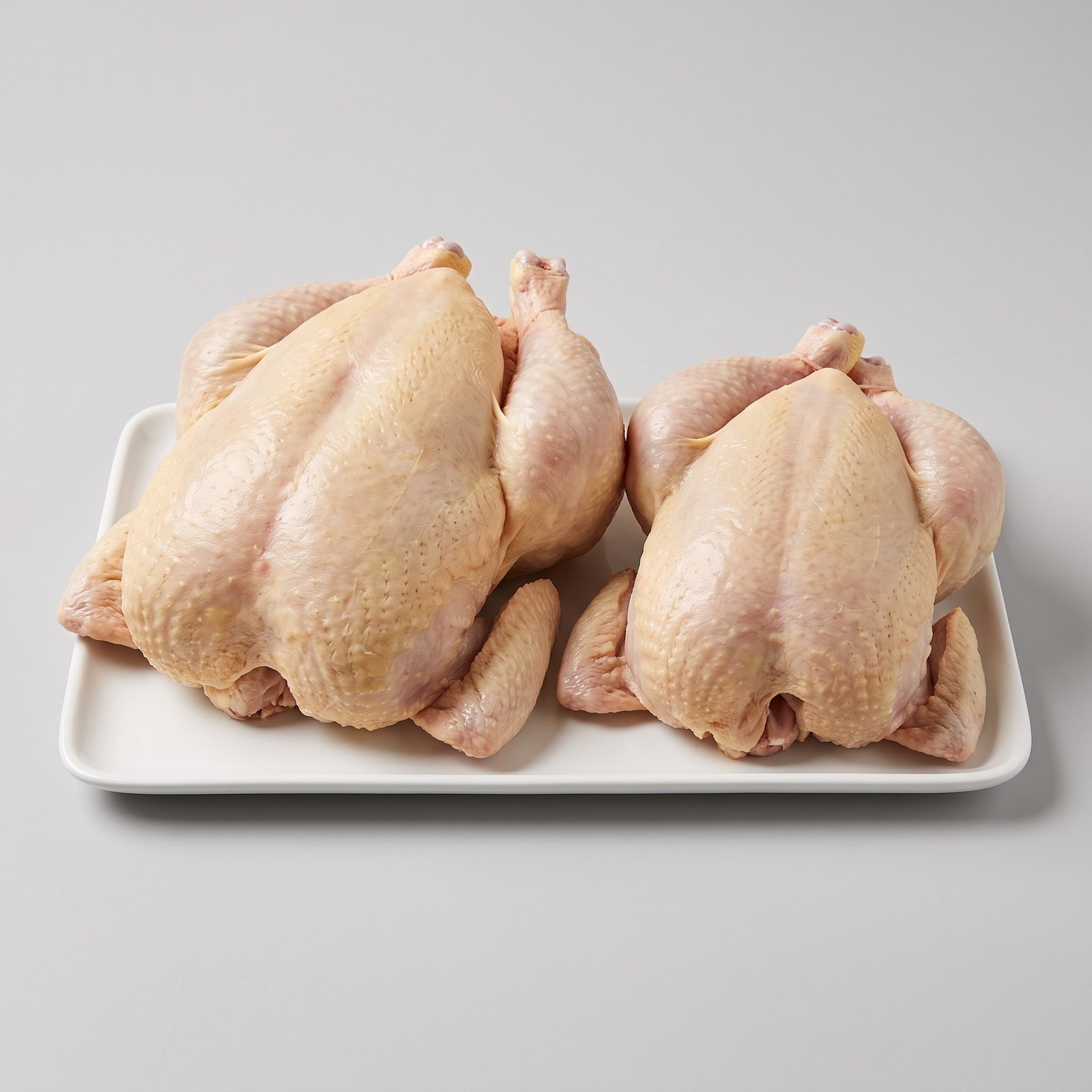
 Chicken
Buyer Guides
Whole Chicken Sizes Explained: From 1200g to 2000g
Whole chicken sizes supplied to professional kitchens are typically measured in grams rather than generic labels such as small or large, with common weight bands running from around 1200g up to 2000g. The weight band that suits a kitchen depends mainly on the finishing method: lighter birds around 1200g to 1400g cook faster and portion well for individual covers, while heavier birds from 1700g to 2000g carry more usable meat and are better suited to jointing, batch roasting or catering-style carving. Matching weight to method is the starting point for planning any whole-bird menu item.
Why Weight Is the Key Variable in Whole Chicken Buying
Chicken breeds and rearing methods vary, but weight is the practical unit that kitchens use to compare whole birds against each other, because it correlates directly with cooking time, portion count and the ratio of meat to bone and carcass. A whole chicken is typically sold oven-ready, so the stated weight is the bird as it arrives in the kitchen rather than a pre-slaughter live weight. The Whole Chicken range listed in the catalogue runs across several weight bands within the wider chicken range, giving buyers a way to match a specific dish or service style to a specific size rather than ordering a single generic bird for every use. Because gram weight is stated per bird rather than per case, it also gives kitchens a consistent basis for comparing a whole bird against jointed cuts from the same catalogue when deciding which format best suits a dish.
Whole Chicken Sizes and Serving Guide
The table below sets out how each weight band is generally used in commercial kitchens. Portion counts are approximate and vary with plate composition, bone-in versus carved service, and how much of the bird is used per cover, so they should be treated as a planning guide rather than a fixed yield.
| Weight | Approx. portions* | Suited cooking method | Typical use |
|---|---|---|---|
| 1200g | 3-4 | Rotisserie, roasting | Quick-turn lunch service, single-bird covers |
| 1300g | 3-4 | Rotisserie, roasting | Standard rotisserie counter service |
| 1400g | 4 | Roasting, spatchcock | A la carte roast chicken dishes |
| 1500g | 4-5 | Roasting, spatchcock | Sharing plates, traditional roast service |
| 1700g | 5-6 | Roasting, jointing | Set menus needing consistent joints |
| 2000g | 6-8 | Roasting, jointing, batch cooking | Catering batches, large-format sharing dishes |
Approximate figures only, actual portion count depends on the kitchen’s plating style and how the bird is broken down. For a broader look at how portion counts are estimated across other cuts and species, see meat portion yields.
Matching Whole Chicken Size to Menu Format
Beyond the specific weight, the decision usually comes down to how the bird will be presented on the pass. A whole chicken destined for rotisserie or spatchcock service needs to cook evenly and reasonably quickly, which favours the lighter end of the range. A whole chicken destined for tray roasting or carving service can run heavier, since more time in the oven is generally available and the priority shifts toward yield per bird rather than turnaround speed. A whole chicken destined for jointing into individual cuts benefits most from the top of the weight range, since the extra weight converts more directly into usable portions once broken down. Kitchens that stock several weight bands within the wider chicken range can match the format to the dish rather than adapting a single size to every use.
Selecting a Size for Rotisserie Service
Rotisserie service rewards consistency, since every bird on the spit needs to reach a safe internal temperature within a similar cook window to keep service moving. Kitchens running rotisserie counters generally favour the lighter end of the range, such as the Whole Chicken 1200, because smaller, more uniform weights reduce the spread between the fastest and slowest cooking bird on the same spit. Heavier birds can still be rotisserie-cooked, but the load needs to be balanced and cooking time extended accordingly.
Sizing for Oven Roasting and Larger Covers
For tray-roasted whole chicken served whole or carved tableside, the 1500g to 1700g band is a common working range, offering enough size for a full roasting tray presentation while still fitting standard combi-oven racking. Heavier birds toward 2000g, such as the Whole Chicken 2000, extend the same principle to sharing-format dishes or events where a single bird is carved to serve a larger group. As weight increases, resting time before carving becomes more important, since a larger bird retains heat for longer and continues to cook slightly after it leaves the oven.
Jointing and Portioning Heavier Birds
Rather than serving a whole bird intact, many kitchens buy whole chicken specifically to break it down into individual cuts, such as legs, thighs, breasts and wings, for menu items that call for a specific joint. Heavier whole chickens generally yield proportionally more usable meat per bird once jointed, which is one reason catering operations working through volume orders often favour the top of the weight range. Breast meat, thigh meat and leg joints all scale with overall bird weight, though not at an identical rate, since larger birds tend to carry proportionally more breast and thigh meat relative to bone and skin. Kitchens that portion in this way, rather than roasting whole, are usually better served buying pre-cut chicken portions directly, and the trade-offs between the two approaches are covered in more detail in chicken portions for foodservice.
Where Whole Baby Chicken Fits
Whole Baby Chicken sits below the standard weight bands described above and is aimed at kitchens plating an individual portion per cover rather than carving one bird across several covers. Because the bird is smaller, cooking time is shorter and the meat-to-bone ratio is different from a full-size whole chicken, which changes how it behaves on the plate and how quickly it needs to come out of the oven.
Poussin and Boiler Chicken: A Different Category
Poussin and boiler chicken are not part of the whole chicken weight range described above, as they represent different birds entirely rather than smaller or larger versions of the same product. Poussin is a young bird intended as a single, individual portion, while boiler chicken refers to a more mature bird generally suited to slow, moist cooking methods rather than dry roasting. Both are listed within the game birds range alongside other smaller-format poultry. A fuller comparison of how poussin, boiler chicken and other smaller birds are used on a menu is covered in game birds on the menu.
Cooking Time, Weight and Food Safety
As a general principle, a heavier whole chicken needs a longer cooking time than a lighter one, but the exact number of minutes varies too much between ovens, stuffing, bone conformation and starting temperature to be stated as a fixed rule. The only reliable way to confirm a whole chicken is safely cooked through is to check the internal temperature at the thickest part of the thigh, without touching bone, using a probe thermometer, and to confirm it has reached the safe minimum set out in current UK food hygiene guidance. Kitchens working with a range of whole chicken sizes on the same day benefit from checking each bird individually rather than assuming a single cook time applies across different weights.
Frequently Asked Questions
What size whole chicken is best for rotisserie service?
Lighter birds in the 1200g to 1300g range are generally preferred for rotisserie service because their more uniform weight keeps cooking times consistent across a full spit, which helps kitchens manage a steady service flow.
How many portions does a 1500g whole chicken yield?
A 1500g whole chicken typically yields around four to five portions, though the exact number depends on plate composition, whether the bird is carved or served in pieces, and how much meat is allocated per cover.
What is the difference between Whole Chicken and Whole Baby Chicken?
Whole Baby Chicken is a smaller bird intended for a single individual portion per cover, while the standard Whole Chicken weight range from 1200g to 2000g is generally used to serve multiple covers per bird, whether roasted whole or jointed.
Are Poussin and Boiler Chicken the same as whole chicken sizes?
No, poussin and boiler chicken sit in a separate category from the standard whole chicken weight range: poussin is a young single-portion bird and boiler chicken is a mature bird suited to slow, moist cooking rather than roasting.
How should cooking time be adjusted for larger whole chickens?
Cooking time should increase with weight, but the precise adjustment depends on the oven and the bird itself, so the safest approach is to check the internal temperature at the thickest part of the thigh with a probe thermometer rather than relying on a fixed time per kilogram.
Kitchens weighing up which whole chicken size suits a particular menu or service style are welcome to contact us with specific requirements. We can talk through the weight range and format that fits a given kitchen’s ordering pattern.
Want Trade Pricing for Your Kitchen?
Pricing is commercial and quoted on request.