



 Beef
BeefBuyer Guides
Beef Steak Cuts Compared: Ribeye, Sirloin, Fillet and Chateaubriand
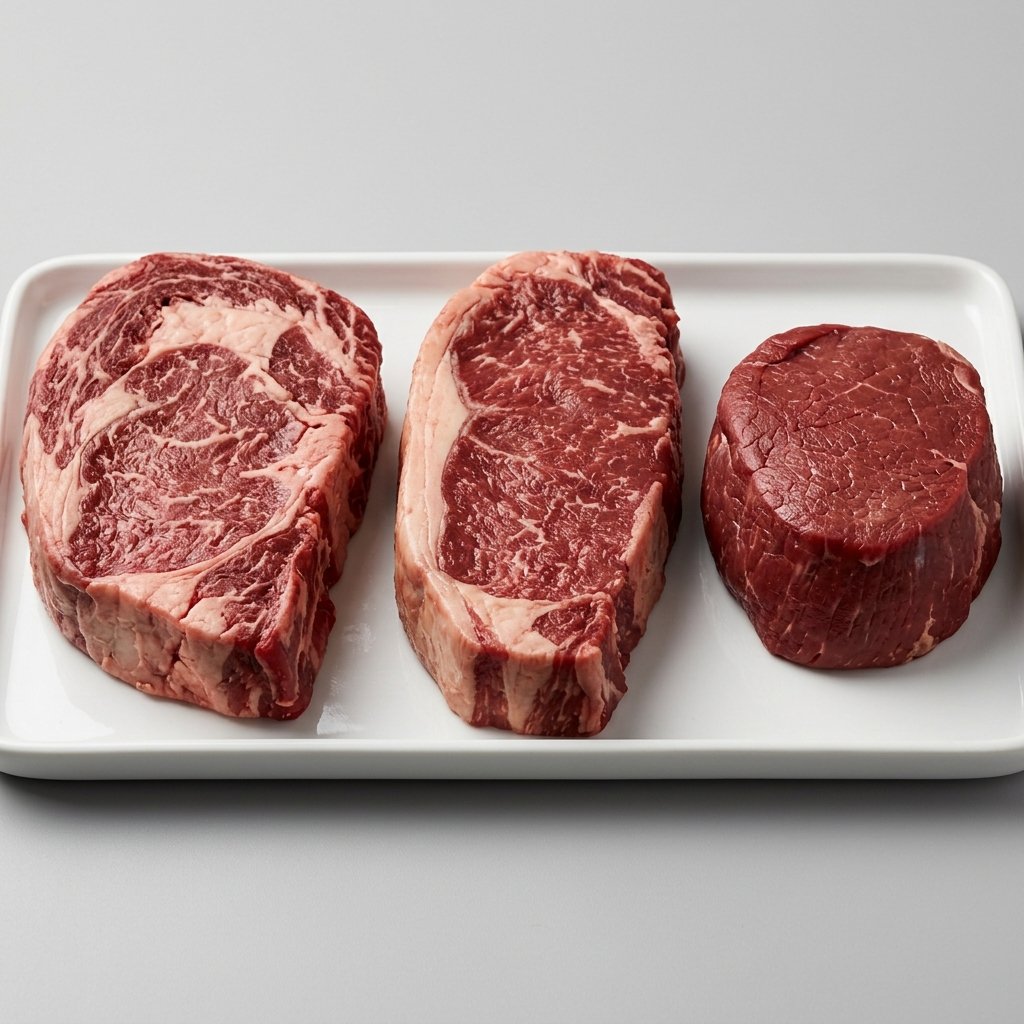
Ribeye, sirloin, fillet and chateaubriand are all beef steaks, but each is cut from a different part of the carcase and behaves differently once it reaches the kitchen. Ribeye comes from the rib section and carries more than one working muscle; sirloin is the outer muscle of the loin, sitting above the fillet; fillet is the tenderloin, the least-worked muscle on the animal; and chateaubriand is simply a thick centre-cut portion of that same fillet, usually prepared for two covers. Cuts such as brisket and eye round, from the chest and hindquarter, are built for slow, moist cooking rather than a quick sear.
Where Steak Cuts Come From on the Carcase
A beef carcase is split into a forequarter and a hindquarter, and that division explains most of the differences between steak cuts. The rib section sits in the forequarter, just behind the shoulder, and is where the ribeye is taken from. The loin runs along the back of the hindquarter: the sirloin muscle sits above the spine, while the fillet lies underneath it, protected and largely uninvolved in the animal’s movement. Further back, the round section at the rear leg yields cuts such as topside and eye round, and the lower chest beneath the forequarter is where brisket comes from.
MEAT FEST’s Beef range is organised around this anatomy, split into three categories: the Steak Cuts category covers ribeye, sirloin, fillet, chateaubriand and other grilling and roasting cuts; the Beef Cuts category covers brisket, ribs, shank, shin and veal; and the Parts & Offal category covers organ meat and other fifth-quarter items such as liver, kidney and ox tail.
Ribeye: Cut From the Rib Section
The ribeye is taken from the rib section of the forequarter, an area that carries several muscles working together rather than one single muscle. The main eye muscle running through the centre sits alongside a smaller muscle at the edge, with a seam of connective tissue separating the two. Because more than one muscle is doing work here, ribeye has a coarser, looser grain than cuts taken from the loin, though it still cooks quickly over direct heat. It is sold both bone-in, sometimes as a tomahawk or rib joint for roasting and carving, and boneless, cut into individual steaks. A single ribeye steak is typically portioned at around 250-300g, while a bone-in rib joint kept whole for roasting will run to several kilograms depending on how many ribs are left attached.
Sirloin: The Loin’s Outer Muscle
Sirloin is cut from the loin, sitting above the spine and directly over the fillet. It is a single working muscle rather than a group, which gives it a firmer, more even grain than ribeye, while still remaining tender enough for quick cooking. Sirloin steaks are usually grilled or pan-fried, and the same muscle can also be kept whole as a sirloin joint and roasted, then carved into slices for service. Standard sirloin steaks are cut at around 200-250g; joints prepared for roasting are portioned by weight to match the number of covers required.
Fillet and Chateaubriand: The Tenderloin
The fillet, also called the tenderloin, runs beneath the spine on the inside of the loin. It is a muscle that does very little supporting work in the live animal, which is why it has the tightest grain and softest texture among the common beef steak cuts. The muscle tapers along its length, so it is generally divided into three sections when butchered: a wider head end, a long even centre, and a narrower tail. Each section is used differently in the kitchen — the head and tail are usually cut into individual steaks or trimmed for smaller dishes, while the centre section is kept as a single thick piece.
That centre section, left whole rather than sliced into steaks, is what is known as chateaubriand. It is typically roasted or grilled as one piece and then carved at the table or in the pass, usually to serve two covers from a single portion. Standard fillet steaks are cut at around 180-220g, while chateaubriand portions generally run from 400g to 600g depending on how many covers the dish is built for.
Slow-Cooking Cuts: Brisket and Eye Round
Not every beef cut on a steak menu is meant for quick heat. Brisket comes from the lower chest, a muscle that supports a large share of the animal’s standing weight and is threaded with connective tissue as a result. That connective tissue only breaks down with long, low-temperature cooking, which is why brisket is braised, stewed or slow-roasted rather than grilled. It is typically sold as a whole joint, ready for slow cooking, curing or smoking.
Eye round is cut from the round section of the hindquarter, behind the rump. Despite sitting in the Steak Cuts category alongside ribeye and sirloin, it is a lean, tightly grained muscle that dries out under fast, high heat and responds far better to slow roasting, braising or thin slicing once cooked. A whole eye round joint is typically portioned at 1.5-2.5kg for roasting or braising.
Beef Steak Cuts Compared at a Glance
The table below sets out where each cut comes from, how it behaves on the board, and how it is typically cooked and portioned.
| Cut | Carcase Location | Texture | Typical Cooking Method | Typical Portion |
|---|---|---|---|---|
| Ribeye | Rib section, forequarter | Coarser grain, more than one muscle | Grilling, pan-frying, roasting bone-in or boneless | 250-300g steak; larger for rib joints |
| Sirloin | Loin, above the fillet | Firm, even grain | Grilling, pan-frying, roasting as a joint | 200-250g steak |
| Fillet | Loin, beneath the spine | Very fine grain, softest texture | Quick grilling or pan-frying | 180-220g steak |
| Chateaubriand | Centre-cut section of the fillet | Same fine grain as fillet, thicker cut | Roasting or grilling whole, carved to serve | 400-600g, usually two covers |
| Brisket | Lower chest/breast | Dense, heavily threaded with connective tissue | Braising, stewing, slow roasting | Sold as a whole joint, various weights |
| Eye Round | Round section, hindquarter | Lean, tight grain | Slow roasting, braising, thin slicing | 1.5-2.5kg joint |
Matching Cuts to the Menu
Grill and pan-fry cuts — ribeye, sirloin and fillet — suit a la carte dishes where a steak needs to be ordered, cooked and served within minutes. Chateaubriand works as a centrepiece dish for two, usually confirmed at the pass given the extra cooking and carving time it needs. Brisket and eye round are better suited to dishes prepared ahead of service — braises, stews or slow-roasted joints that are portioned and plated once the main cooking is done, which also helps even out kitchen workload across a shift.
Kitchens building a wider beef offering beyond these four cuts can also draw on the Beef Cuts category for ribs, shank and shin, used in slow-cooked dishes, or the Parts & Offal range for dishes built around liver, kidney or ox tail. Portion planning across a menu that mixes quick-service and slow-cook cuts is covered in more detail in the guide to estimating meat portion yields, and lamb cuts follow a similar anatomical logic, set out in the guide to lamb cuts.
Frequently Asked Questions
What is the difference between ribeye and sirloin?
Ribeye comes from the rib section and contains more than one muscle, giving it a coarser grain, while sirloin comes from the loin and is a single, firmer muscle. Both are grilled or pan-fried, but ribeye is usually cooked with more attention to rendering the seam of connective tissue running through it.
Is fillet the same as chateaubriand?
Chateaubriand is cut from the fillet, specifically the thick centre section of the muscle rather than individual steaks. Standard fillet steaks are cut from the head and tail ends of the same muscle, so both come from the same cut but are portioned differently.
Why does brisket need slow cooking while ribeye doesn’t?
Brisket is a muscle that supports much of the animal’s weight while standing, so it carries a dense web of connective tissue that only softens with long, low-temperature cooking. Ribeye and other loin or rib cuts carry less of this connective tissue, so they cook through quickly over high heat.
What is a typical steak portion weight for a restaurant menu?
Ribeye and sirloin steaks are usually portioned at 200-300g, fillet steaks at 180-220g, and chateaubriand at 400-600g when serving two covers from one piece. Exact portioning depends on the dish and the menu, so kitchens generally set their own house standard.
Can eye round be cooked like a steak?
Eye round is listed in the Steak Cuts category, but its lean, tight grain suits slow roasting, braising or thin slicing far better than fast grilling, which tends to dry it out.
Choosing between these cuts comes down to how a kitchen wants to use cooking time and covers across a shift, from a quick-service ribeye to a braised brisket prepared well ahead of service. Contact us via the contact page to discuss requirements for a specific cut, portion size or bone-in and boneless preference.
Want Trade Pricing for Your Kitchen?
Pricing is commercial and quoted on request.