



 Lamb
LambBuyer Guides
Lamb Cuts Explained: A Guide for Professional Kitchens
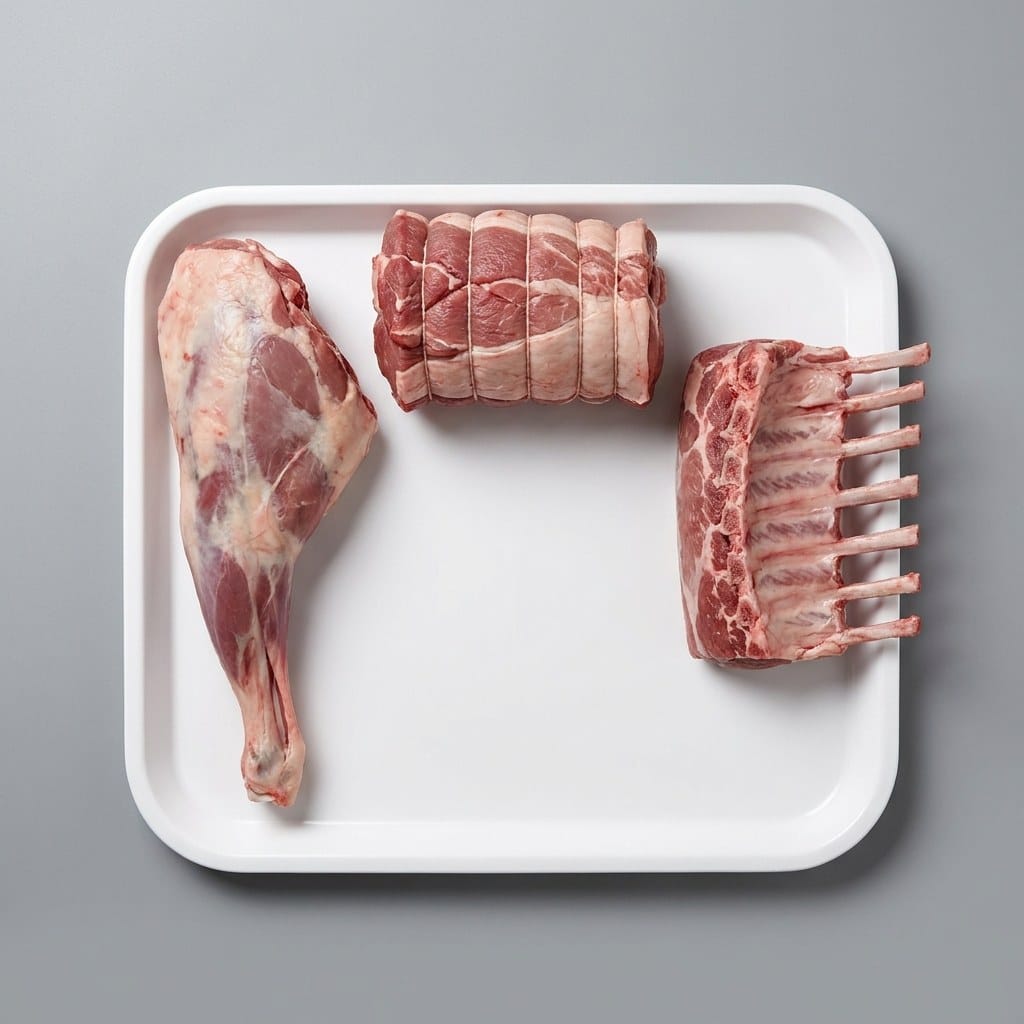
A lamb carcase for foodservice buyers divides into eight groups: shoulder, leg, best end, breast, middle neck, neck, chine and chump, and a further group covering offal, mince and whole-carcase items. Each group comes from a different part of the animal, carries a different balance of muscle, fat and connective tissue, and suits a different kitchen job: slow-braised neck and diced leg for curries, trimmed best end racks for a la carte plates, rolled breast for slow roasting. Recognising which group a cut belongs to is the fastest way to match it to the right pan, oven or grill.
How the Lamb Carcase Breaks Down for Foodservice Buyers
On the carcase, the divisions run roughly front to back and top to bottom. The shoulder sits at the front, above the front leg, and is a well-worked area with more connective tissue than the hindquarter. Moving along the back from front to rear, the neck is the foremost section, followed by the middle neck. Next comes the best end, the rib section usually presented as a rack, and then the chine and chump, which make up the saddle and the transition into the leg. The breast runs underneath, from the neck back towards the loin, covering the ribs from below. The leg forms the hindquarter. A further group sits outside this front-to-back split and is bought and stored on its own terms: offal, mince, feet, head and whole or baby lamb. Buyers who know this layout can often predict, before checking a specification, whether a cut needs long, gentle cooking or will hold up to quick grilling. The lamb range in the catalogue runs to 55 lines across these eight groups, the largest single species range MEAT FEST lists.
Shoulders: Cuts for Slow Roasting and Pulled Lamb
The shoulder is a well-exercised muscle group at the front of the carcase, carrying more connective tissue and fat marbling than the leg. That structure breaks down well under long, low-temperature cooking, which is why shoulder is the standard choice for slow roasting, pulled lamb and braised dishes. Boned and rolled, shoulder meat is also pressed and stacked for doner-style cones, a preparation associated with Turkish and wider Middle Eastern menus and covered in more detail in the guide to doner cones. The shoulders category lists whole shoulders, boneless shoulders and shoulder shanks, the last of these suited to individual braised portions rather than a whole roasting joint.
Legs: Roasting Joints, Diced and Minced Cuts
The leg forms the hindquarter and is leaner and less worked than the shoulder, which makes it the standard cut for a bone-in roasting joint on British-style menus. The same muscle group is also sold boneless, diced or minced, which extends its use into curries in Indian kitchens and kebabs and skewers on Turkish and Middle Eastern menus. Leg shanks, cut from the lower leg, are worked separately again: a bone-in single portion suited to individual braising rather than carving from a joint, and listed as lamb leg shanks in the catalogue. The legs category covers whole, boneless, diced and minced formats alongside the shanks.
Best Ends and Middle Necks: Racks, Chops and Braising Cuts
Best Ends
The best end is the rib section forward of the loin and is usually sold as a rack, French-trimmed or left with the cap on. Because the muscle here does relatively little work, it cooks quickly and suits roasting or grilling whole, or being cut into individual cutlets for a la carte service on British and European menus. Racks are also a cut where portion planning matters, a subject covered separately in the piece on meat portion yields. The best ends category lists whole racks, chops, and cap-off and French-trimmed formats, including the best end racks line.
Middle Necks
The middle neck sits just forward of the best end, on the continuation of the rib cage, and carries noticeably more connective tissue and bone. It does not suit the quick cooking a best end takes well; instead it is typically diced, sliced into chops or filleted for braising and stewing, including British hotpot-style dishes. The middle necks category in the catalogue lists chops, fillets, racks and boneless formats.
Necks and Breasts: Economical Cuts for Stews and Slow Cooking
Necks
The neck is the foremost section of the carcase and one of the hardest-worked areas, which means it needs slow, moist cooking to become tender. Diced or sliced neck is a standard base for stews and casseroles on British menus and for slow-cooked dishes across Middle Eastern and Turkish kitchens. The necks category lists whole necks, neck racks, and diced, sliced and boneless formats.
Breasts
The breast runs along the underside of the carcase, covering the ribs from below, and is made up of layered lean and fat. It is usually slow roasted, rolled and stuffed, or braised whole on British menus; boned breast is also cut down for grilling on Middle Eastern and Turkish menus. The breasts category lists whole breasts, chops, and boneless, short and cut-off formats.
Chine and Chumps: Loin Chops and Fillets
The chine sits in the saddle section, immediately behind the best end and ahead of the chump, and yields loin chops, chine fillets and the narrower pencil fillets. The chump is the cut between the loin and the leg and is typically sold as chump chops, boneless chump or diced chump. Both are worked less than the shoulder or neck, so they cook relatively quickly on the grill or in the pan. This format suits skewer-style grilling on Turkish and Middle Eastern menus as well as grilled chops on British menus. This is one of the largest single groups in the lamb range, and the chine and chumps category lists all of the chop, fillet and diced formats.
Others: Offal, Mince and Whole Lamb
The remaining catalogue group covers cuts that fall outside the front-to-back carcase split: heart, liver, kidney, feet, head, tail fat, trims, tripe, mince, and whole or baby lamb. Offal cuts are used across a wide range of cuisines for dishes built around the so-called fifth quarter, a topic covered in more depth in the article on offal and the fifth quarter. Mince is used for kofte on Middle Eastern and Turkish menus and keema-style dishes in Indian kitchens, while whole lamb and baby lamb are bought for spit-roasting or whole-carcase presentations at catering events. The others category lists all of these formats together.
Lamb Cuts at a Glance
The table below summarises where each group sits on the carcase, how it is typically cooked, and the kind of service it suits.
| Cut | Position on the Carcase | Typical Cooking Method | Typical Service Style |
|---|---|---|---|
| Shoulder | Forequarter, above the front leg | Slow roasting, braising | Pulled lamb, carved roasting joint, doner-style cones |
| Leg | Hindquarter | Roasting, dicing, mincing | Carved roasting joint, curries, kebabs |
| Best End | Rib section, forward of the loin | Roasting, grilling | Racks and cutlets for a la carte plates |
| Middle Neck | Forward of the best end, along the rib cage | Braising, stewing | Hotpot-style dishes, casseroles |
| Neck | Foremost section of the carcase | Slow braising, stewing | Stews, casseroles |
| Breast | Underside, covering the ribs | Slow roasting, braising | Rolled and stuffed joints, boned for grilling |
| Chine & Chump | Saddle and the cut between loin and leg | Grilling, pan-frying | Loin and chump chops, skewers |
| Offal & Other Cuts | Outside the front-to-back split | Varies by item | Fifth-quarter dishes, mince-based dishes, whole-carcase service |
Frequently Asked Questions
What is the difference between a lamb best end and a middle neck?
Both come from the rib section, but the best end sits further back, forward of the loin, and is worked less, which is why it is usually sold as a rack for roasting or grilling. The middle neck continues forward along the rib cage, carries more connective tissue, and is generally cut into chops or fillets for braising and stewing rather than quick cooking.
Which lamb cut is best suited to slow cooking?
Shoulder, neck, middle neck and breast all suit slow, moist cooking because they come from well-worked areas of the carcase with more connective tissue. Leg and best end are worked less and are generally cooked more quickly, by roasting or grilling.
What is a lamb chump chop?
A chump chop is cut from the chump, the section of the carcase between the chine and the leg. It is a relatively tender cut suited to grilling or pan-frying rather than long braising.
What counts as the fifth quarter in lamb butchery?
The fifth quarter refers to the parts of the carcase outside the main primal cuts: offal such as heart, liver and kidney, along with feet, head and trim. These are covered in more detail in the article on offal and the fifth quarter.
How many lamb cuts does MEAT FEST list in its catalogue?
The lamb range is organised into eight groups: shoulders, legs, best ends, breasts, middle necks, necks, chine and chumps, and a further group of offal, mince and whole-carcase items, totalling 55 catalogue lines, the largest species range in the catalogue.
Buyers working from a fixed menu can use these eight groups to narrow down a specification quickly, whether that means a best end rack for a plated main or diced neck for a braise. We list all eight groups in full on the site; contact us to discuss your requirements against the current lamb range.
Want Trade Pricing for Your Kitchen?
Pricing is commercial and quoted on request.