



 Chicken
Buyer Guides
Game Birds on the Menu: Quail, Poussin and Boiler Chicken
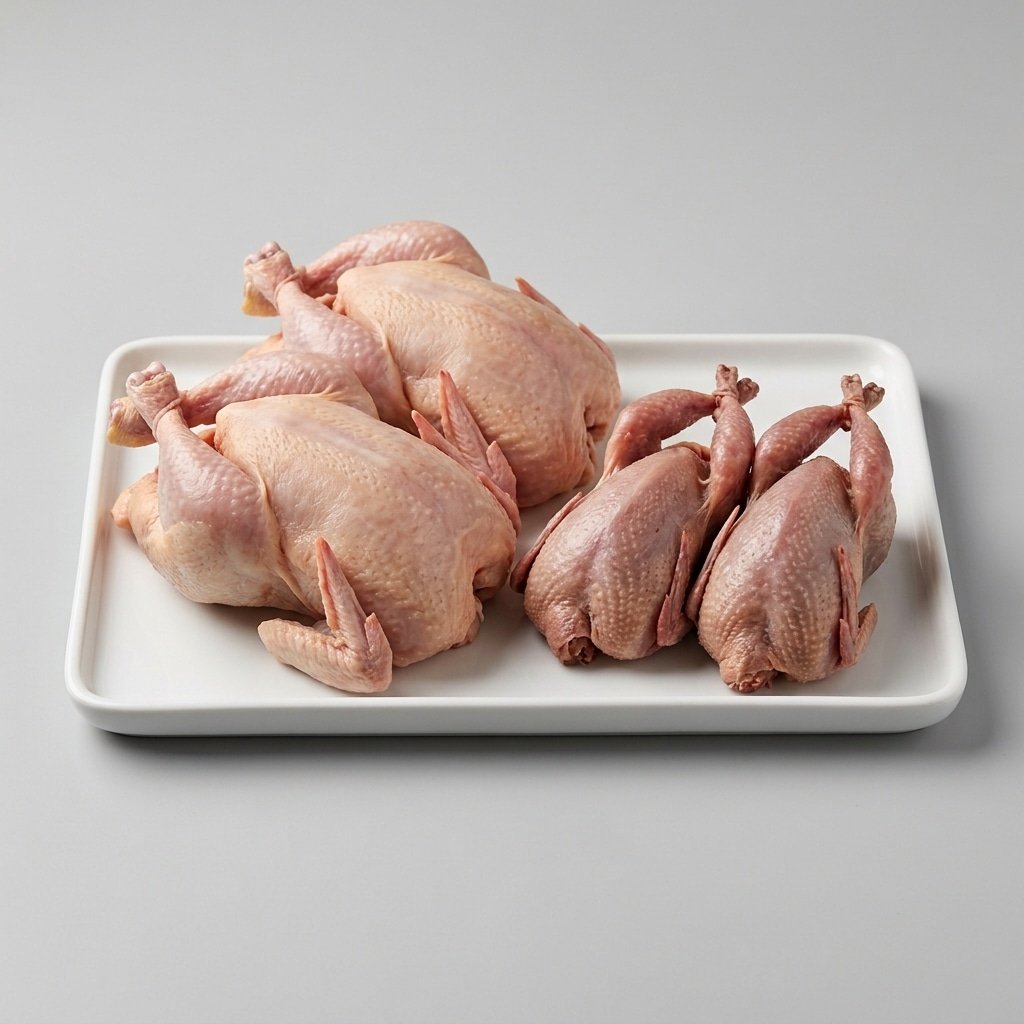
On a professional kitchen order sheet, “game birds” often describes a service format rather than birds taken in the wild. In the MEAT FEST catalogue, the Game Birds category groups four whole-bird products: Quails, Poussin, Corn-Fed Chicken and Boiler Chicken, each suited to a different point on the menu. Quail and poussin are built for quick cooking and single-portion presentation; corn-fed chicken sits alongside the standard whole chicken range for roasting; boiler chicken is reserved for long, moist-heat cooking such as stock, soup and curry.
What “Game Birds” Means on a Wholesale Order Sheet
The term is a menu convention rather than a claim about rearing or hunting. On the chicken range, the Game Birds category currently lists five products: Quails, Poussin, Corn-Fed Chicken, Corn-Fed Chicken — Smoked, and Boiler Chicken. What links them is not origin but format: three are small whole birds suited to individual or near-individual portions, and one, boiler chicken, is a mature bird suited to extended cooking rather than fast roasting. For the standard whole-chicken weight bands used in bulk roasting and carving, see whole chicken sizes explained, which covers a separate size range from the birds discussed here.
Quail: Small Format, Fast Cooking
Quail is the smallest whole bird on the list, dressed well under the weight of a poussin. Because of that scale, quail is usually served two to a portion rather than one, particularly on starter or small-plate menus. The bird’s small mass means it cooks quickly under high, direct heat, such as grilling, pan-roasting, or a short spell in a hot oven, and it dries out fast if left too long, so timing matters more than it does with larger birds. Many kitchens spatchcock or butterfly quail before cooking, which flattens the bird for even contact with a grill or pan and shortens cooking time further. Because quail carries relatively little fat of its own, a light baste, a wrap such as a strip of bacon, or a marinade helps keep the breast meat from drying out before the leg meat is fully cooked. Quails are listed as a stand-alone product on the catalogue, separate from the sizing conventions used for standard whole chicken.
Poussin: A Single-Portion Roasting Bird
Poussin is a young whole chicken, sized for one bird per cover rather than for carving and sharing. Its main advantage on a menu is presentation and portion control: each plate carries its own whole roasted bird, which reads clearly on a bill of fare and simplifies costing per cover. Whole poussin can be roasted as it is, but many kitchens spatchcock it — removing the backbone and pressing the bird flat — to cut roasting time, promote even browning, and make it easier to sear skin-side down on a grill or plancha before finishing in the oven. Flattening also increases the surface area exposed to a marinade or dry rub, which matters given how quickly the small bird cooks through. Poussin is listed on the catalogue as a whole bird alongside the wider Game Birds range.
Boiler Chicken: Built for Slow, Wet Cooking
Boiler chicken sits at the opposite end of the Game Birds range from quail and poussin. It is a mature bird with firmer, more worked muscle than a standard roasting bird, and that firmness is the reason it is not cooked quickly. Extended moist-heat cooking, such as simmering for stock, long cooking in soup, or slow-cooked curry and haandi-style dishes, gives the connective tissue time to break down into gelatin, which is what produces a rich, well-bodied stock and tender bone-in or pulled meat after an hour or more of cooking. Kitchens that build stock or base gravies from scratch, or that run a curry or soup section where the bird is simmered whole or jointed, generally reach for boiler chicken rather than a young roasting bird, because a quick-roast bird cooked for the same length of time tends to turn out tough and stringy where boiler chicken holds up well. Boiler Chicken is listed as a distinct product on the catalogue rather than as a size variant of standard whole chicken.
Corn-Fed Chicken as a Whole-Bird Option
Corn-Fed Chicken and Corn-Fed Chicken — Smoked appear in the Game Birds category as two further whole-bird listings. In terms of format, corn-fed chicken sits closer to the sizing used across the standard whole chicken range than to quail or poussin, and can be roasted whole, jointed, or split and grilled depending on how the menu portions it. The smoked variant already carries a smoked flavour before further preparation, which suits applications such as cold service, salads, or a quick reheat rather than raw roasting from scratch. For kitchens portioning a whole bird into fillets, thighs, legs and wings rather than serving it whole, chicken portions for foodservice sets out the standard cuts and where each one is used on a menu.
Cooking Method and Service Format at a Glance
The table below summarises how each bird in the range is typically handled, from size class through to cooking method and service format.
| Bird | Size class | Typical cooking method | Typical service format |
|---|---|---|---|
| Quail | Smallest whole bird in the range | Quick roast, grill or pan-fry | Two birds per portion, starter or small plate |
| Poussin | Single-portion whole bird | Whole roast, or spatchcocked and grilled | One bird per cover |
| Corn-Fed Chicken | Standard whole-chicken class | Whole roast, jointed, or split and grilled | Shared or jointed portions |
| Boiler Chicken | Mature, larger bird | Long, moist-heat cooking: stock, soup, curry | Portioned or pulled after cooking |
Kitchen Practice: Spatchcocking, Marinade Surface Area and Plating
Spatchcocking, which means removing the backbone and pressing a whole bird flat, is standard practice for both quail and poussin in commercial kitchens, mainly because it solves two problems at once. First, it flattens the bird to an even thickness, so the breast and leg finish cooking closer together instead of the breast drying out while the leg catches up. Second, it opens up the skin and exposed meat to a marinade, rub or baste across a wider surface, which matters more on small birds where the ratio of surface area to mass is already high and flavour needs to penetrate quickly rather than over several hours. For plating, a spatchcocked poussin or a pair of spatchcocked quail present as a flatter, wider cut than a trussed, round roast bird, which suits a plancha or char-grill finish and gives more visible skin per portion. Boiler chicken, by contrast, is rarely spatchcocked, since it is destined for the pot rather than the grill or oven, and the cooking method depends on submersion or slow moist heat rather than surface browning.
Portioning and Covers
Because quail and poussin are usually costed and served as whole units rather than cut into fillets or joints, portion planning for these two birds is more straightforward than for a jointed whole chicken: the unit is the bird itself. For kitchens working out how many covers an order of corn-fed chicken or standard whole chicken will yield once jointed into fillets, thighs, legs and wings, meat portion yields sets out a general approach to estimating quantities per cover across different cuts.
Frequently Asked Questions
What is the difference between quail and poussin?
Quail is smaller and usually served two to a portion, cooked quickly under high heat. Poussin is a larger single-portion whole bird, typically served one per cover, and can be roasted whole or spatchcocked before cooking.
Why is boiler chicken used for stock, soup and curry instead of roasting?
Boiler chicken is a mature bird with firmer, more worked muscle than a young roasting bird. Long, moist-heat cooking gives the connective tissue time to break down, producing a well-bodied stock and tender meat, whereas the same bird cooked quickly at high heat tends to turn out tough.
Should quail or poussin be spatchcocked before cooking?
Many kitchens do, because flattening the bird promotes even cooking between breast and leg and increases the surface area exposed to a marinade or rub. It is not compulsory, but it generally shortens cooking time and improves consistency.
Can corn-fed chicken be roasted whole like other whole birds?
Yes. Corn-fed chicken sits in the same general size class as the standard whole chicken range and can be roasted whole, jointed, or split and grilled depending on the menu. The smoked variant is better suited to cold service or reheating rather than raw roasting.
How many quail should be planned per portion?
Most kitchens plan two quail per portion for a starter or small-plate dish, given the bird’s small individual size, though this varies with how the dish is composed and what else sits on the plate.
Specifications, weight bands and pack formats for quail, poussin, corn-fed chicken and boiler chicken are confirmed at the point of enquiry. Contact us to discuss requirements for a specific menu or covers count.
Want Trade Pricing for Your Kitchen?
Pricing is commercial and quoted on request.