



 Lamb
LambBuyer Guides
Diced and Minced Lamb and Beef: Choosing the Right Cut for Curries, Kebabs and Burgers
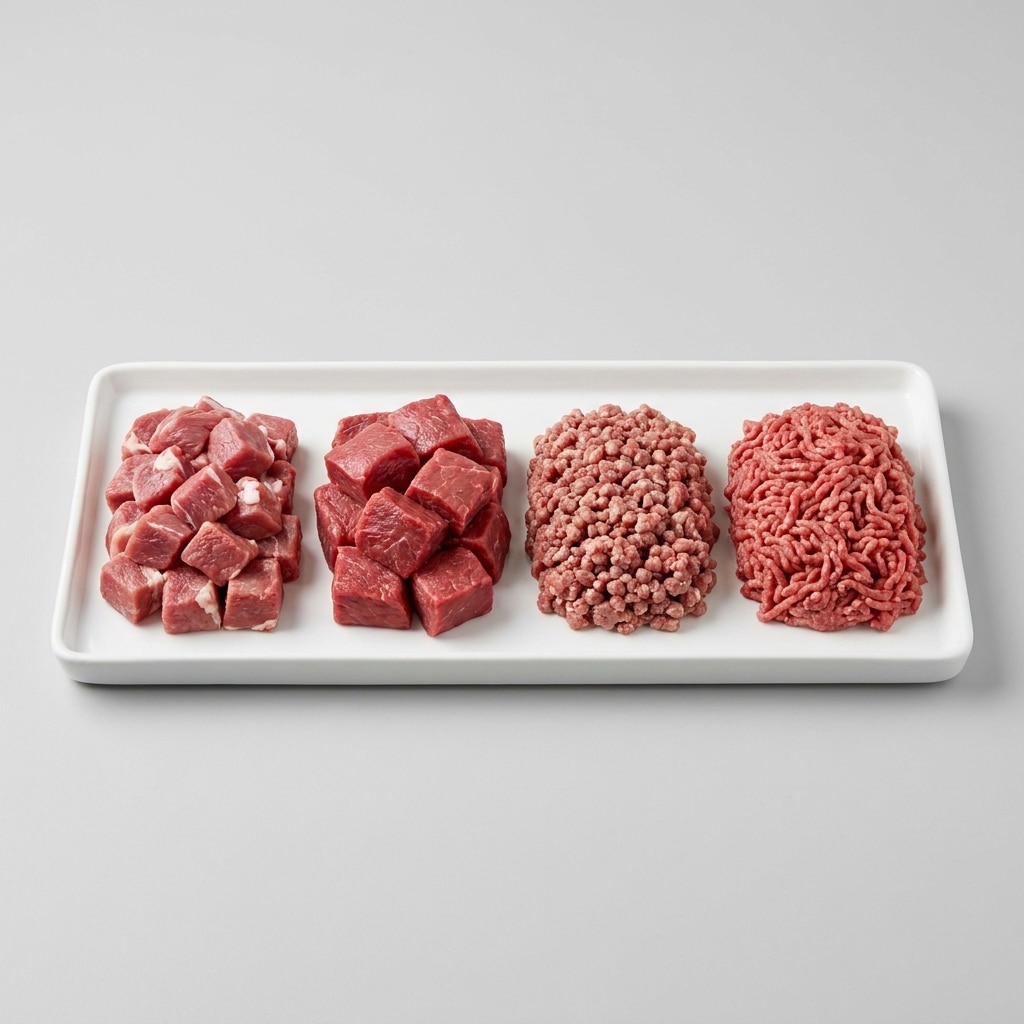
For curries and stews, dice from hard-working, well-marbled muscles: lamb neck and shoulder, or beef shin and brisket, which turn tender over a long simmer. For shish kebabs, use leaner diced leg or chump, which holds its shape over a hot grill. For minced kebabs and burgers, choose mince with enough fat to bind and stay juicy, ground to suit the dish. The rule is simple: match the cut to the cooking time and the heat, not just to the name on the menu.
Why the cut still matters once meat is diced or minced
Dicing and mincing hide where the meat came from, but they do not change how it cooks. A cube of neck still contains the collagen of a muscle that worked all day, and a cube of leg is still lean and fine-grained. Collagen needs time and moisture to soften into gelatine, which is what gives a slow curry its body. Lean muscle cooks quickly and becomes dry and tight if it is left in a pot for hours.
Mince follows the same logic with fat added to the picture. Fat carries flavour, keeps the meat moist under high heat and helps mince bind. That is why a burger made from very lean mince can be crumbly and dry, while a slow-cooked keema made from fattier mince may need skimming. Knowing the source cut lets a kitchen predict how a dish will behave before it reaches the pass. The guide to lamb cuts for professional kitchens explains where each primal sits on the carcass.
Diced and minced lamb in the catalogue
The lamb section of the catalogue lists five ready-prepared diced and minced lines, each from a different part of the animal. The table below summarises how they compare in the kitchen.
| Product | Source cut | Character | Typical uses |
|---|---|---|---|
| Lamb Leg Diced | Leg | Lean, fine-grained, holds even cubes | Shish kebabs, quicker curries, pan-fried dishes |
| Lamb Neck Diced | Neck | Marbled, rich in connective tissue | Slow curries, stews, tagines, hotpot |
| Lamb Chump Diced | Chump | Tender with a little more fat than leg | Skewers, grills, shorter braises |
| Lamb Leg Minced | Leg | Leaner mince | Keema, sauces, fillings, blending |
| Lamb Mince | Ask for the source | General-purpose mince | Kofte, burgers, moussaka, shepherd’s pie |
Diced leg
Leg is the lean, versatile option. It cuts into clean, regular cubes that look tidy on a skewer and cook evenly. It is the natural choice for shish, for curries that cook in under an hour and for dishes where the meat is seared first. Cooked for too long, it loses moisture faster than neck or shoulder.
Diced neck
Neck is the stewing cut. It has more fat and sinew, which makes it less neat when raw, but over a long, gentle simmer that connective tissue breaks down and enriches the sauce. Slow curries, Irish stew, tagines and hotpots all suit neck. The lamb necks range also covers whole and boneless neck for kitchens that prefer to dice in-house.
Diced chump
Chump sits between the loin and the leg. Diced chump is tender enough for skewers and grills but carries a little more fat than leg, which helps it stay moist over charcoal. It also works in shorter braises where leg might dry out.
Choosing lamb mince
Mince is only as predictable as its source. Mince from a named cut, such as leg, gives a consistent, leaner result that suits keema, pasta sauces and fillings. General-purpose lamb mince is often made from a mix of cuts and trim, and its fat content can be higher, which suits kofte, burgers and anything that is grilled or fried. Because fat levels vary between products and batches, it is worth asking what a mince is made from and agreeing a specification that suits the dish.
The grind matters too. A coarse grind gives a looser, more open texture for burgers and kofte. A fine grind, sometimes minced twice, produces the smooth, sticky mixture that seekh and adana kebabs need to cling to a skewer. Kitchens that grind in-house can control both factors; kitchens that buy mince ready-made should state the grind they want.
Beef for dicing and mincing: shin, brisket and topside
The beef cuts section of the catalogue lists whole cuts rather than ready-diced or minced beef, so kitchens usually dice or mince beef themselves. Three cuts cover most needs.
- Beef shin is heavily worked and full of connective tissue. Diced, it is one of the best cuts for long braises, beef curries and pies, where it becomes soft and gelatinous.
- Beef brisket has layers of fat running through it. Diced, it suits slow cooking; minced, it brings the fat and flavour that make a burger juicy.
- Topside is lean and close-textured. It can be diced for quicker dishes and stir-fries, or minced where a leaner result is wanted, often blended with a fattier cut. Topside is listed with the steak cuts in the catalogue.
Dicing and mincing in-house gives control over size, grind and fat, but it takes labour, equipment and careful hygiene. Any preparation requirement can be raised when discussing an order.
Matching the cut to the dish
The table below brings lamb and beef together by dish. It is a starting point; house recipes and cooking methods will move the choice in one direction or the other.
| Dish | Lamb choice | Beef choice | Why |
|---|---|---|---|
| Slow curry, stew, tagine | Diced neck or shoulder | Diced shin or brisket | Collagen softens over a long simmer and thickens the sauce |
| Quick curry, stir-fry | Diced leg | Diced topside | Lean meat stays tender with short cooking |
| Shish kebab | Diced leg or chump | Not usually beef | Even cubes, short and hot cooking |
| Kofte, seekh, adana | Fattier lamb mince, finely ground | Brisket-based mince | Fat binds the mixture and keeps it moist on the grill |
| Burgers | Lamb mince, coarse grind | Brisket mince, coarse grind | Fat and open texture give a juicy patty |
| Keema, ragu, pie fillings | Lamb leg minced | Leaner mince, topside blended | Cooks in liquid, so less fat is needed |
Doner is a separate case: the cones are built from seasoned, layered or minced meat and are bought ready-made. The guide to doner cones covers the differences between chicken, beef, lamb and mixed cones.
Dice size, handling and storage
Size changes cooking time. Smaller cubes cook faster and suit quick curries; larger cubes hold together through a long braise and look generous on a skewer. Whatever size a kitchen chooses, keeping it consistent makes cooking times reliable and portions easier to control.
Diced and minced meat has far more exposed surface than a whole joint, so it needs tighter handling. Keep it chilled at 5°C or below, store it on lower shelves away from ready-to-eat food, and rotate it ahead of whole cuts. Mince in particular should be used promptly and cooked through. The cold chain and storage guide sets out practical receiving and storage checks.
When estimating how much to order, buying ready-diced boneless meat means very little waste, while dicing from bone-in shoulder or neck produces bone and trim that must be allowed for. The guide to portion yields explains how to plan quantities per cover.
Frequently Asked Questions
What is the best lamb cut for curry?
Neck and shoulder give the richest result in a long-simmered curry because their connective tissue softens into the sauce. Diced leg also works and keeps neater cubes, but it is leaner and can turn dry if it is cooked for as long as neck. Many kitchens choose by cooking time: neck for slow curries, leg for quicker ones.
Is diced leg or diced neck better for shish kebabs?
Diced leg is the usual choice for shish because it is lean, cuts into even cubes and stays tender over a short, hot grill. Chump is a good alternative with a little more fat. Neck has more sinew and suits slow cooking better than a skewer.
What kind of mince works for seekh or adana kebabs?
Skewer kebabs need mince with enough fat to bind and stay moist, ground finely enough to cling to the skewer. Very lean mince tends to crack and fall off during grilling. Ask what a mince is made from before choosing it, because mince from a named cut such as leg behaves differently from mince made from mixed trim.
Can the same beef mince be used for burgers and bolognese?
It can, but results differ. Burgers need fat to stay juicy over high heat and usually come from coarser mince, while a ragu or cottage pie filling tolerates leaner mince because it cooks slowly in liquid. Kitchens that serve both often keep two specifications.
How should diced and minced meat be stored in a commercial kitchen?
Keep it chilled at 5°C or below, separate from ready-to-eat food, and use it ahead of whole joints because cut meat has far more exposed surface. Label each batch with its delivery or preparation date and follow the use-by date on the pack.
If you are planning a menu around diced or minced lamb and beef, we can talk through the cuts that suit each dish. Contact us to discuss your requirements.
Want Trade Pricing for Your Kitchen?
Pricing is commercial and quoted on request.